The Carceral Sickness Project employs archival research and co-production methodologies to investigate the complex histories of the carceral system and of a society afflicted with carceral sickness—or in other words, addicted to incarceration.
With a focus on the state of New York in the early twentieth century, the research team explores the cumulative physical, psychological, and social harms produced by uncontrolled incarceration, which functions as a central mechanism of the carceral system. It intensifies pre-existing conditions, spawns new afflictions, and enforces psychic violence through confinement, surveillance, classification, and separation. These effects ripple beyond prison walls, harming families, marginalized communities, and society at large, making unchecked incarceration both a symptom and driver of broader social inequities.
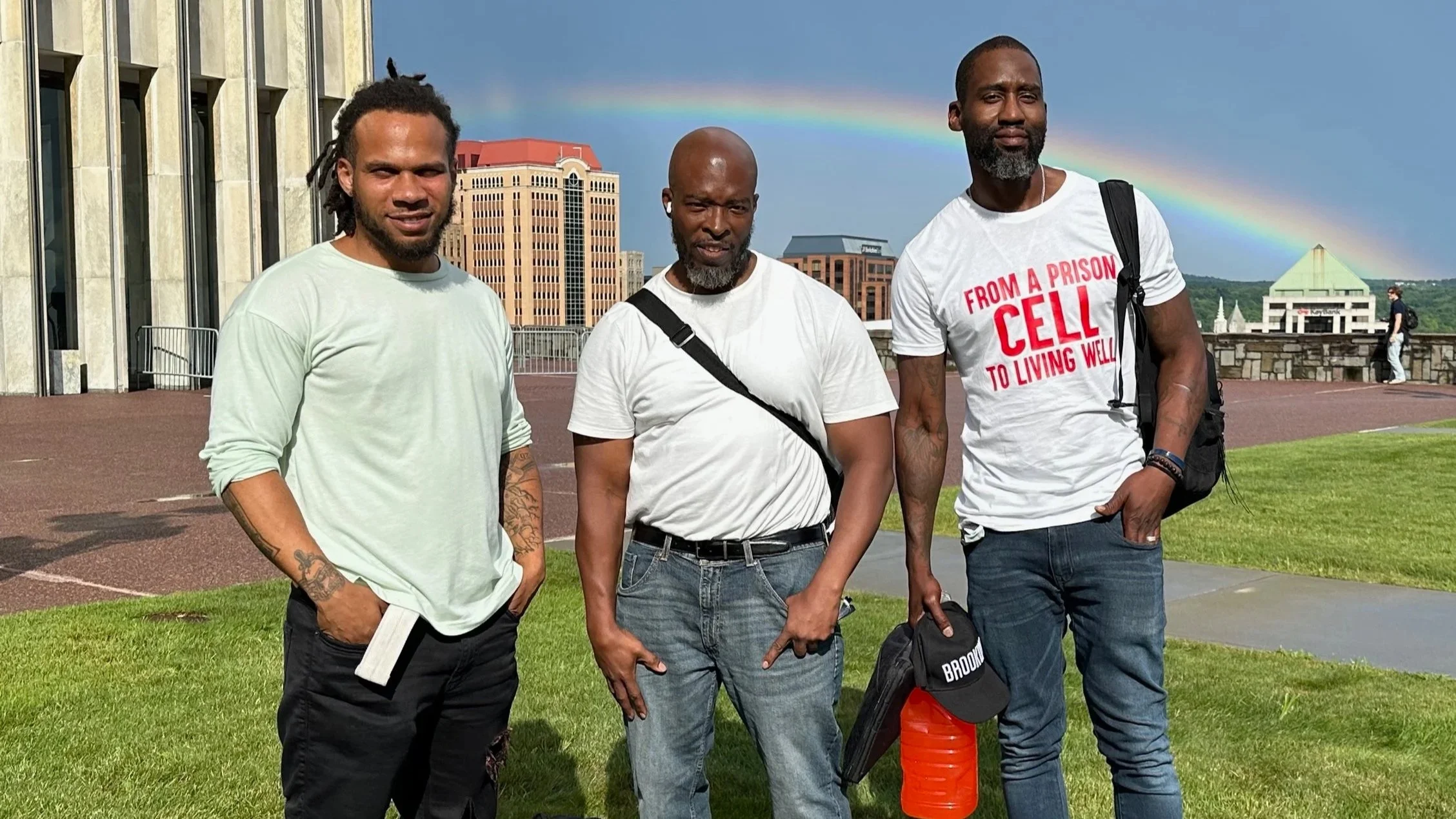
The research team is led by Dr Richard A. McKay, a historian of medicine, public health, and sexuality affiliated with the University of Cambridge, and is composed predominantly of justice-impacted co-researchers—Kevin Kareem Brooks, Leon “Struggle” Davis, and Reginald T. Qualls—who bring a collective experience of well over 50 years of understanding New York carceral facilities from the inside out.
Initially supported by a Larry J. Hackman Research Residency award at the New York State Archives, the team has received valuable ongoing support from Hudson Link for Higher Education in Prison, a non-profit based in Ossining, New York, which aims to empower currently and formerly incarcerated individuals through college education, re-entry support, and advocacy. Hudson Link supported the initial Hackman fellowship application, assisted with the recruitment and interviewing of applicants from its alumni community, and also contributed financial and logistical support to research and presentation visits.
The Carceral Sickness Project team brings a wealth of experience in making engaging public presentations about their work. Since undertaking their first archival research visit in July 2024, they have presented internationally to audiences in Albany, Ossining, Boston, Buffalo, Stony Brook, Leeds (United Kingdom), and Berlin (Germany), and delivered a keynote address to the 2025 Rise Up Conference. The team combines lived experience with historical expertise to build a dynamic history that speaks to the present. They also leverage peer networks that amplify the voices of individuals who are still incarcerated.
If invited to give a presentation the team can share the successes and challenges of their journey and lessons learned about the value of such partnerships for reaching broader audiences. They are also able to give attention to the issue of dehumanization in prison systems past and present, the role of prison psychiatrists in shaping the New York state carceral system, the importance and challenge of using multiple lenses of analysis, and the fraught relationship of documentary evidence to prisoners’ lived experience.